

This weekend is ANZAC day in Australia. It is our national day of remembrance for those who fought in the Australian and New Zealand Army Corps (ANZAC) during WWI. Thanks to very poor British intel (pricks), their campaign in Gallipoli was literally an uphill battle and many brave young men died for reasons they didn’t fully understand. Their stories became foundational to Australia’s national identity.
The minute of silence on ANZAC day is observed between the trumpet sounds of the last post. Everywhere in Australia you will find a dawn service. You get up at 4am to attend, the sun begins to rise and the scene is set for reflection. All sporting events for the weekend will also have a minute silence before them. Each year on ANZAC day my eyes water thinking about all the young men who were sent to die. Many stories are easily found of boys lying about their age so they could sign up to fight at 16 and 17.
This time of reflection makes me feel overwhelmingly grateful for the life I have. It makes me thankful for a general feeling of safety. When you go home, tell them of us, and say: for your tomorrow, we gave our today. There were hundreds of thousands of my past countrymen who gave their last days for me to breathe my first. Every time I think of their sacrifice I renew my lease on life.

What frustrates me is that for 364 days of the year, I don’t think of them at all. There is this powerful thought in my brain that is able to wipe all of my greed away and I am so incapable that I require a marked holiday in order to use it. I know in my heart that their sacrifice deserves far more than one minute of one day each year. I know that thinking of them will make me feel gratitude, but I don’t think of them. So often we already know the answers to our problems but we are completely incapable of realising them.
We are like children burning ourselves on stoves over and over again. Perhaps the answer is to reframe how we think about our brains. My favourite analogy for happiness is our happiness tyres. Our happiness tyres are constantly deflating and we need to pump them up each day or they will go flat. I think by knowing I will be sad if I don’t actively do things to make myself happy I’m more likely to remember that there is no final state of happiness. I need to manage my happiness surplus, and be understanding if I’ve come in under budget sometimes.
Our knowledge of everything that we don’t reinforce disappears but we pretend like it doesn’t. I’ve watched a movie and only realised I’d already seen it after an hour into the film. This has happened many times. Our everything tyres are deflating right alongside our happiness ones.
So often we must contemplate death in order to appreciate life. Memento mori. If we take even one moment to think about a loved one dying, we enhance their significance to us. At least for a little while. A reminder that every one of our family members will die one day makes us suddenly reach for the phone and call. We are like Pavlov’s dog, but instead of a bell we require a thought.
The cool part for us is that we can be both the dog and Pavlov (the bell ringer, first of his name). We know what bells to ring in order to trigger certain responses, but we for some reason decide to leave them unsung. If every day or week you paused for a few moments to ring them, you know you’d be happier.
I had absolutely no control over where I was born or what family I was born into. There are billions of people on this planet who faced the same. I won the lottery when it came to being born into a safe, comfortable environment with parents who continue to love me. I didn’t deserve any of that, it was just good fortune.
If I stop to consider all of the other people who are born into conditions far worse than mine, and how it absolutely could have been me because at birth there is nothing inherently earned or deserved—then I become more grateful for my life. I also feel an injection of motivation to live for those who didn’t get the chance. For those who gave their today for my tomorrow. I have spoken about my concept of baselines whereby one institutes certain non-negotiables into each day. Maybe there’s space for some mental bell-rings to be added into mine.
Metta meditation is one ancient practice that tries to enforce daily gratitude via thought. You start with someone you know well, someone that is easy to wish for their happiness. Then you pick a total stranger and wish them to be free from suffering. The hard part is then picking someone who you might not be particularly fond of, and wishing them well nonetheless. If meditation is a regular part of your routine, this is one way to go about it—but it’s just the beginning of what’s possible.
We already know everything that’s good for us. We know how good it is for a friend to call out of nowhere and say I miss you, but we don’t think of this as a gift we can give each day. We possess all the levers of happiness already but we seek other avenues in strange places. Often what we need is not a change of location, it is a change of perspective.
I want to find a solution where I can use these mental cues to spark gratitude. Like an actor having emotional memories to cry or find anger, I could try and find the inverse and seek happiness. There are an infinite number of people who have suffered and sacrificed so I can write this piece. Horrendous genocide was committed for my country to even be called a country. The ANZACs fought and died. My parents sacrificed to ensure I felt loved.
All of these thoughts have the power to change my perspective. Each day could be approached with an entirely new mindset; like a cheat code. I already use a gratitude journal each morning so it’s not like I would be starting from zero. But there is a massive difference between listing 3 things I’m grateful for and a deep reflection on those who lost their life for my today.
Like any powerful tool, this too needs to be wielded with caution. Overuse can lead to a deep feeling of guilt, we didn’t ask to be born. We didn’t ask for the suffering of our ancestors. But with the correct use I believe it can be a supplement to a better lens on life.
Inside my brain is a little clown that blows up helium balloons every time I learn something new. They float to the ceiling then slowly deflate and eventually lie on the ground. It’s really messy in there. There are lots of dead eminem-lyric-filled balloons on the floor. I am definitely stupid enough to forget what is good for me every day of the week until I resume a permanent state of dopamine-override.
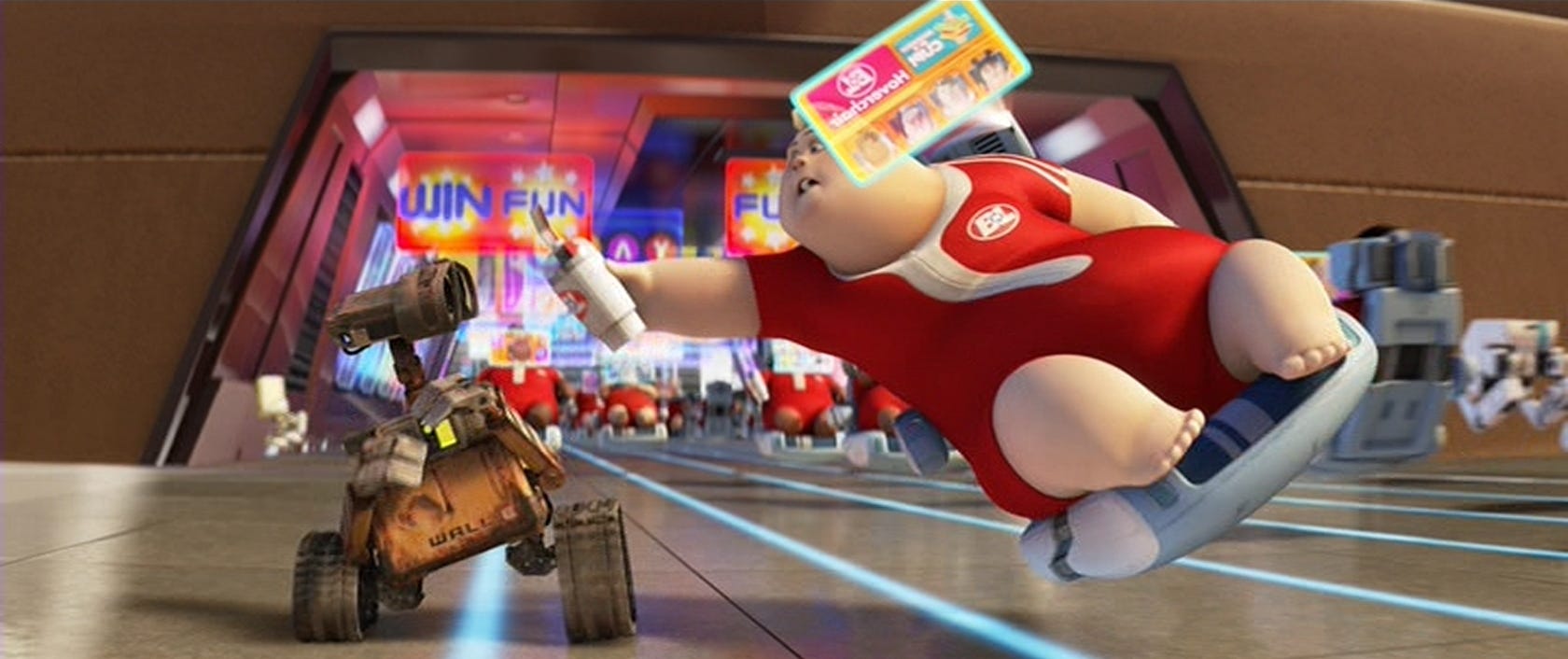
Let me sit in my recliner WALL-E chair and have infinite scroll AI slop injected into my brain. Maybe I will take a break for one minute of each year to remember those who ran up a hill into bullets just for a chance that their future generations could be free. All my habits, my happiness, my gratitude, my relationships and even my knowledge of what is good for me are deflating each day.
Now I know what you’re thinking: wow, this Jords guy is so insightful I’m so glad to have learned something new today—but you’ll forget it in a few days. Or maybe in a few minutes if you were distracted or maybe you never learned it because you were interrupted while reading. Don’t be hard on yourself though, I’ll forget this too.
The idea for this piece came with watery eyes imagining myself thrown into war. Trying to understand what it must have felt like to be far from home, surrounded by strangers at the bottom of a hill while bullets rained down. I wondered what it felt like to be lost, I wondered if I would have volunteered as so many brave boys did.
I spent hours of my weekend writing about this. The blinds down blocking out the sun, researching wars and trying not to get too distracted reading about Russian dogs. But all that doesn’t matter, it just extends the amount of time before I’ll forget it. The knowledge will deflate and I will forget unless something jogs my memory—or I find the right bell to ring and consistently ring the fuck out of it.
I so enjoyed listening to your reading of this podcast. So much to think about.