

Welcome wonderful people to another piece of Jords lore. We are in late 2020 and I am sitting in perfect contentment, dreaming of the world burning. A gentle ‘ahh’ falls from my breath as I lean back in my chair and do my best Michael Burry drum impression. Trump just got COVID. The most powerful man in the world might die, the markets are going to crash, millions of innocent people will have their retirement funds wiped—I couldn’t be happier.
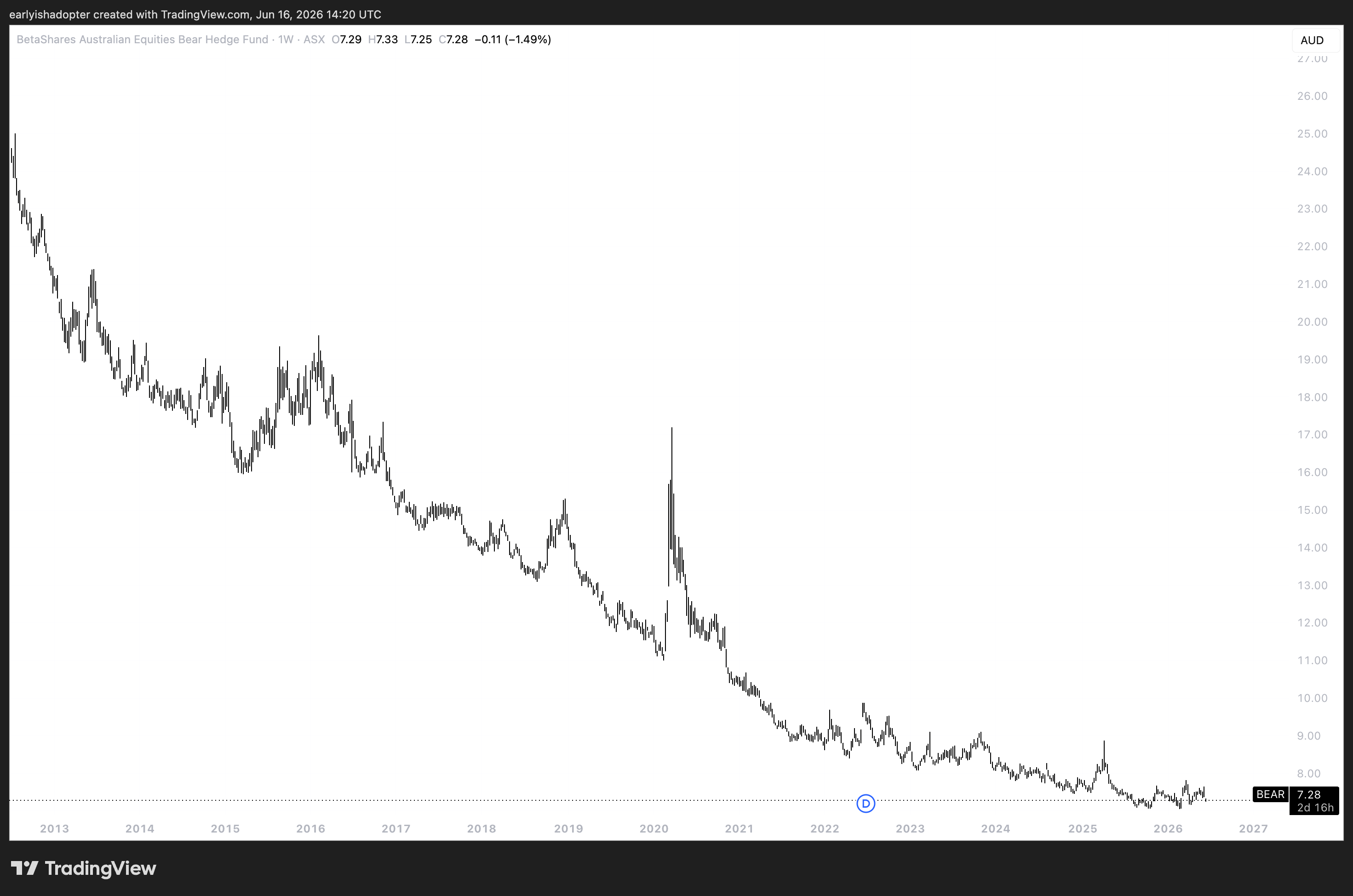
At the time I had been holding a stock called…and yes this is not a joke… $BEAR. I had absolutely no idea what the fund did but boy was I confident that riches awaited me when the world finally collapsed. The Trump headline was my holy grail. Red panty night had arrived.
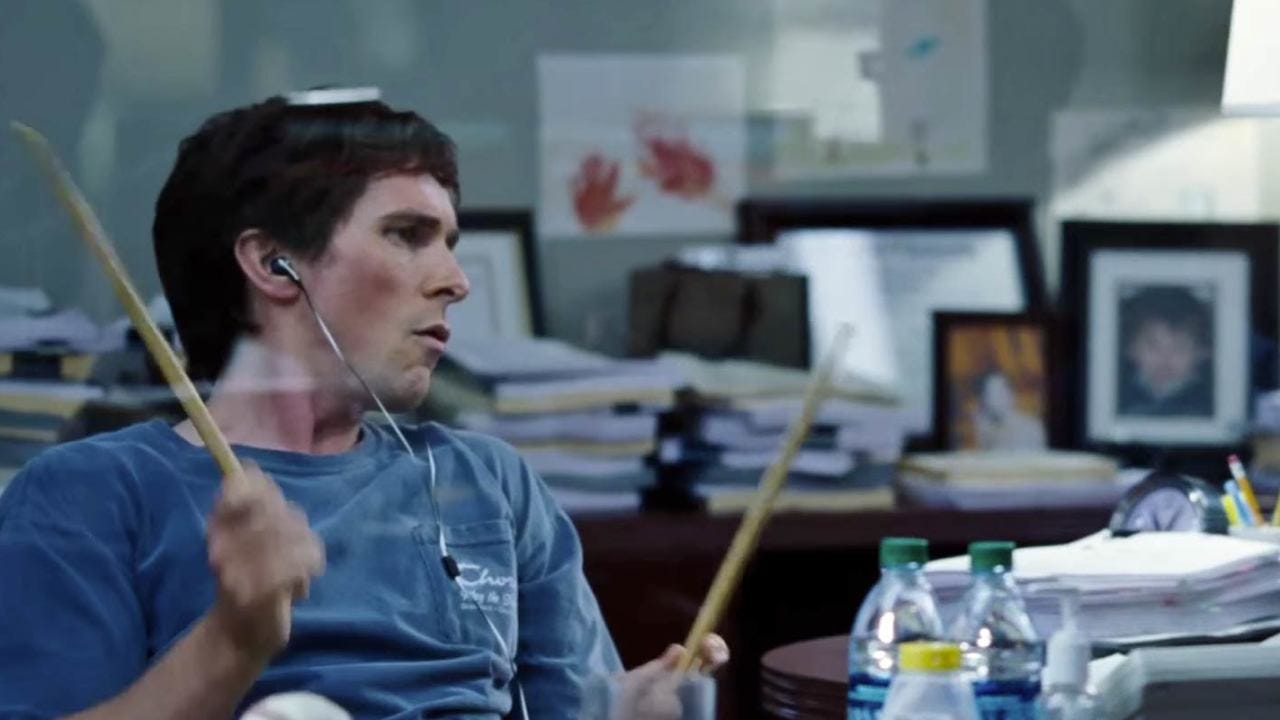
My forum and I (obviously I was on a forum) opened up the charts in shock, why didn’t the world see what we saw? The leader of the free world might die and the market didn’t care???? I didn’t understand how everyone else was so stupid. I had chalked this up to the curse of my intelligence at the time. I was 20 something and a half with absolute conviction of being correct.
I told myself that I was in this trade because I was going to make money, but it was more than that. It felt… sexy. I felt like a puppet master, a clairvoyant mastermind. It made me feel like I’m the only girl in the world (the only one that you’ll ever love). There is such an allure to being a doomer, I didn’t want to give up the feeling of control. I now understand why so many people love a good armageddon prediction. Those who dream of judgement day.
Y2K, 2012, literally every year since 1 BC for Christians. People love possessing secret or unique knowledge, we just want to feel important. The gravitational pull toward doomerism is so strong that when you’re in it you are actually fine with the world ending if it proves you correct.
In your very last breath as the universe collapses in on itself you can whisper ‘I told you so’ and all is well. I’ve been cursed with this affliction a few times in my trading career and it pretty much always ends badly, because even if you’re correct what kind of quality of life do you have waking up each day hoping all your loved ones go broke?
The issue expands far past just markets, everyone thinks things were better in the past, worse today and will be worse in the future. Study after study shows people think society used to be nicer, the world was safer, that kids were less soft or stupid. We think our grandparents had it easy because they didn’t have to worry about job security or housing costs but we forget about the war planes that were flying over their heads.
Part of every great dictator’s pitch is that the past used to be fucking tits and the present is super not cash money. It’s why America once regressed to slavery and why Putin will never shut up about Peter the Great. The easiest way to get people on your side is tell them that the world is shit now but it used to be great, this is because it appeals to the disease of doomerism.
It’s not my fault that I didn’t achieve my dreams, it’s the world. Like 14-year-old me screaming at my playstation controller, we blame the tools and the system rather than taking accountability. How can I hit my signature flick shot off the top of Rust when my joystick is greasy?
But was the past so utopian and is the present so dystopian? I think the answer to both is no and I can explain why. Like many things in psychology it is an adorable cocktail of a few well-studied biases. The first being negativity bias, a loss hurts roughly twice as bad as a win.
We’ve all been there, in a symphony of good things happening we focus on the one bad. Sometimes we even find a negative within a positive that dilutes the feeling. Like hitting a winning trade then thinking about how you could have bet more. The negative hits harder than the rest. The second bias to consider is recency bias.
When Trump got COVID I was convinced that the world was going to fall apart. I did not have in my head that the markets had recently fallen 30% in a single day or that more money was being printed than ever before. I read the headline and was convinced.
So we under appreciate the positive and focus on the negative, then the recency bias makes us feel like the world we live in has all gone to shit. I’ll admit, I also have a tendency to fall into this. Screen time and the state of the world can sometimes make me feel sad, I think about what we’ve lost. But that’s also because I don’t think about what we’ve gained.
So we can point pretty accurately to why we think the present day is doomed, but why do we look to the past through such rose tinted glasses? This one can be explained via the fading-affect bias. Here’s a random cut scene of my life to explain what that is, wow you guys are really being treated to some Jords origin lore today.
When I was in high school I joined a last minute debate competition. I had never been formally trained in debating but I was very used to winning arguments and notoriously annoying to disagree with. My natural charm got my team through the first two debates without issues and things were progressing exactly as my teenage arrogance had predicted.
I remember telling my team mates that preparing notes was for nerds and debating was ez pez so I would not be doing that. It turned out that preparing notes was actually for nerds because we competed against a team of nerds in the final who absolutely fucked my shit up.
A lifetime of cheeky remarks and good banter had not prepared me for people who were actually prepared and knew what to do. I stumbled through my non-existent lines with flushed cheeks in front of my friends and high-school crush. It was up there with the worst 90 seconds of my life at that time and was so for a while. But now it’s funny.
I look back on this story with a smile on my face. I think about how stupid I once was, it kind of makes me feel nostalgic for my schooling years. When the worst of my worries was trying to look cool and smart. This is the fading-affect bias in practice. The negative memories of the past fade or become funny stories while the good stuff sticks with us.
We say that today’s music sucks ass because we think of the early 90s and imagine Nirvana and Radiohead taking over the charts. What we forget about is the Achy Breaky Heart’s and everything smelling like cigarettes. Women’s (lack of) rights and the war on drugs gets replaced with Woodstock and men in suits.
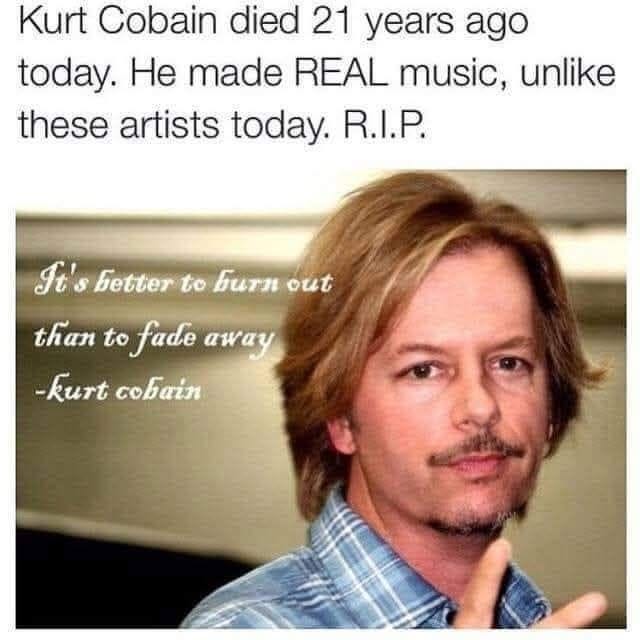
Everything is relative and the fears we have today very likely feel to us the same way they did to those in the past. The same is true with our past selves. How we feel about AI now is likely how people felt about Y2K. There is always something that makes us feel like we’re on the precipice.
We can get lost in dreams of how good things used to be. Questioning where it all went wrong—but nothing went wrong. Understanding why we feel this way is the first step to seeing the beauty in the world again.
We want to be the one who sounds the alarm, to be Michael Burry while the world collapses—but at what cost? There is no possible reward large enough to justify waking up hoping the world burns. Average people just trying to get by should not have to go through poverty so that we can feel good about ourselves. If others must fail in order for you to win you are unlikely to ever feel true satisfaction.
I want to wake up each day hoping for a better world for the people around me. I want to feel like I’m contributing, not like I’m waiting for the contributions of others to fall apart. I want to be a man of action. If your niece is lovely why would the niece of an immigrant be less lovely? I empathise with the world because I know we’re all affected by the same biases, fighting the seduction of doomerism.
I empathise with those who lived in the past. I know their struggles felt the same as mine, even if they could afford a house and didn’t have a smartphone. There was no golden era of contentment that I was robbed of, there is just today and if I’m lucky there is a tomorrow too. How beautiful the hope for tomorrow can be once we begin to appreciate it.
I cannot function as a pessimist. Like the sun, I must shine and help others grow.
absolutely awesome. thank you.
one of your best mate.