

When I decided to commit to writing each week, I knew I was bound to miss deadlines at some point in time. I’ve posted 9 weeks in a row now, but as an Australian it was only a matter of time before I found a few too many Valentino Frothies (beers) at the tail end of the week; making the Monday post deadline seem like a distant dream. Fortunately, I had planned for just such an occasion and had a back-up article fully completed that I wrote earlier in the year. Unfortunately, it was shit.
After hitting a few too many sugarcane champagnes (rums) this week, I decided to finally use the ace up my sleeve and save my Sunday. As I read through it I was confused, the subject matter was right up my alley, but the voice was wrong. It felt forced and stale. Simply put it felt like a worse writer than myself had written it, and then I began to realise that is exactly what had happened.

Since writing that piece, I have been writing consistently, with deliberate focus and increasing passion, for over two months. At the end of the day improvement comes from deliberate practice. It is the combination of prioritisation and time allocation (showing up). When I started to write, I didn’t really consider that maybe I would become a better writer over time. When trying to build something new, it’s hard to acknowledge you might be years away from your best work.
There is a common term we use in trading, ‘stairs up, elevator down.’ It represents just how quickly you can lose everything that you gained over a long period of time if you make the wrong moves. With skill acquisition, the journey is the same but the risk of loss is not present; but just as in trading, there is no elevator to success, you have to take the stairs. A successful journey is a long one marked with incremental improvement and small victories. The most difficult part of slow progress is that we rarely have good metrics to measure our improvement.
I’ve spoken in the past about treating skill acquisition like a video game progress bar; breaking down difficult tasks into hours required and tracking percentage increases regardless of how it feels. If I know I need 500 hours of deliberate focus time to become a good writer, maybe I’ll get there by the end of the year. I won’t feel like I’m making progress each week, but my percent-to-completion bar will continue to move forward.
Reading my back-up article was a tangible measurement of progress. These reminders of our progress bar moving in the right direction are usually taken for granted in pursuits where they are obvious and mistaken for non-existence when they are not. When I was trying to improve at chess, I was reaffirmed by my ELO (rating) slowly creeping upwards. When I was training for a half-marathon, I was able to witness in real time my heart rate slowing and my pace increasing as I trained. When we see ourselves becoming better at things, they become more interesting to us and create a positive flywheel that propels us further forward. We enjoy it more, so we do it more. We do it more, so we become better.
I remember stepping on the scales every day analysing minor swings in my weight and becoming frustrated at lack of progress; then an iCloud memory popped up from ‘this time last year’ that instantly reminded me how far I’d actually come. The (inflated) face I was looking at on screen was a distant memory and the progress was obvious. Too often we compare ourselves to yesterday or the week before, instead of last month or year. We do the same with finance, greed takes over and instead of gratitude for what we have, we turn our focus to what we could have had. We always use our all-time highs as the benchmark and not how far we’ve come from the bottom. The staircase to success means focussing on the small details of victory, it means appreciating habit-change and showing up, not just celebrating the breakthroughs.
My backup article represented a previous version of me, it was my two-month reminder that my progress bar had moved forward. I’ve also noticed my brain has started to rewire itself in a significant way since I began this journey. We think that after we mature our brains are set in stone, but it’s not true. I used to tweet a lot, and I’m not proud to admit but I would find myself ‘thinking in tweets’. My brain would see something interesting and start formulating it as a tweet that might be received well.
Now I’ve begun ‘thinking in articles’. My brain receives the same information but instead of trying to form it into 100 characters and a meme that might pair well with it; I’m now thinking about long-form discussion and what topics I want to research. My intrusive thoughts are potential titles for unwritten work. Sometimes I wake up and feel inspired to write. I even wrote poetry randomly last week because for some reason I could not get a single verse out of my head without doing so.
It feels incredibly healthy to notice my brain starting to prefer deep-thinking over surface level dopamine. It also gives me hope that this pattern will continue as I continue to read and write consistently. I find it funny that I’m celebrating forming the same brain patterns that I likely did as a 10-year-old in primary school, but such are the times we live in.
We like to think in very binary terms about how difficult tasks are. Learning a language takes years, writing a book is only for retirees, getting abs is not possible. But often the sacrifice that is required, at least what actually feels like sacrifice, is months not years. Now this is where most wellness-influencers or Youtube shorts would throw titles like ‘get abs in 7 days’ or something like that. But I won’t lie to you, doing hard things is hard, that’s kind of the point. It’s also what makes them a legitimate differentiator between you and your peers.

Research from University College London found it takes an average of 66 days for a behaviour to become automatic. This roughly coincides with when most people first notice measurable improvement in a new skill. Practice isn’t always fun. But the least amount of fun you will have is when you’re doing something you don’t know how to do while also not noticing any improvement. This is why most structured programmes (language learning, fitness, therapy) are designed around 8-12 week blocks, because at the end of it you will likely both form new habits and notice improvement.
When you start working out, the first 4-6 weeks are essentially just reprogramming your nervous system so that more obvious improvement will show itself in the months to follow. When we are considering acquiring a new skill, the focus should not be on how long it will take to be completed, it should be on trying to figure out if we can survive the first 66 days that it takes to (likely) form the habit. After the initial window of deliberate practice, you will often find you’ve started to change as a person too.
Your brain will start to think as a healthier person and make decisions based on the previous sacrifice you’ve put in. You might start thinking in long-form thoughts instead of reels. There is also new motivation that comes with finally seeing new progress after several weeks of slow habit formation.
If I write each week for a year and no one reads it, I will have become a much better writer. Maybe next year people will want to read what I have written as the improved future version of myself. While they read my weird Australian jokes, they will not know it is only possible from the hundreds of hours I spent writing to no one the previous years.
When I read stories to my future child, they will not know that I became a better orator and speaker by recording my articles that no one read for an entire year. They will not appreciate the sacrifice it took for me to so eloquently inject Dr. Seuss into their brains, nor will I appreciate how it all came from my ability to do something hard for 66 days, before it became my life.
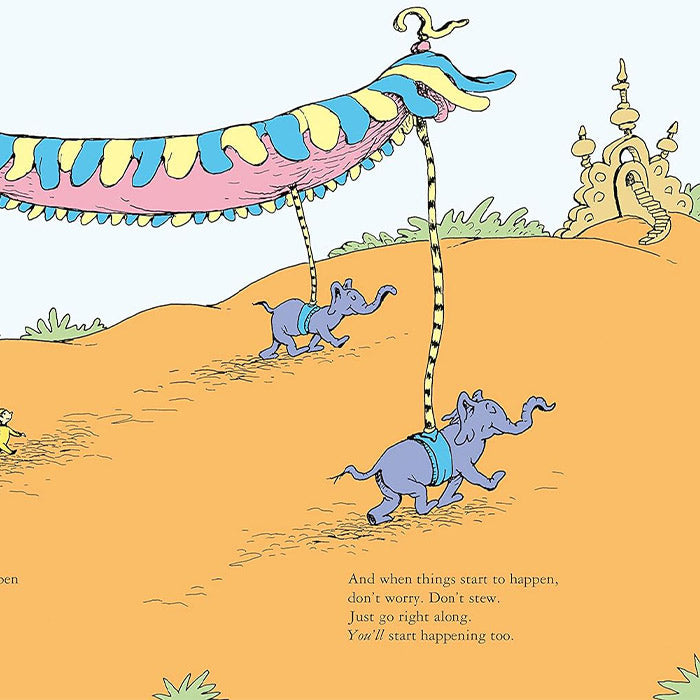
Practice what you’re preaching. Do the thing, then keep doing it
Really loved the part about viewing skill acquisition as a video game. gamify everything